100 ARCHIVES

Posts


Posts
Sports and Leisure

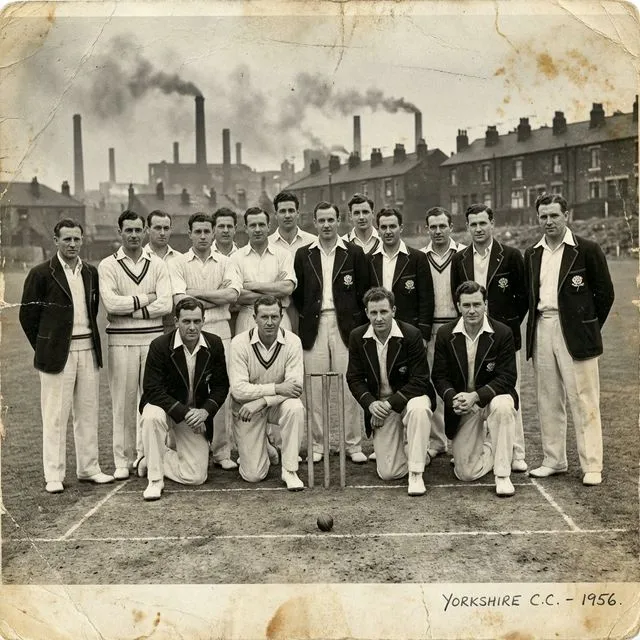
The White Rose in Transition: An Anatomy of Yorkshire Cricket in 1956

Introduction: The Fulcrum of History

In the vast and storied narrative of English sport, few years carry the silent weight of 1956. For the Yorkshire County Cricket Club (YCCC), this was not merely another season recorded in the Wisden Cricketers’ Almanack; it was a fundamental historical fulcrum. To the external world, the club appeared as a monolith of stability - a bastion of Northern tradition that seemed impervious to the passage of time. However, a forensic examination of the club’s internal reality reveals an institution suspended precariously between two distinct epochs: the rigid, classical grandeur of the pre-war years and the aggressive, turbulent modernity that would soon engulf the sporting world of the 1960s.

YRK-1956-DEPTH Read Record →
Posts
Science and Innovation

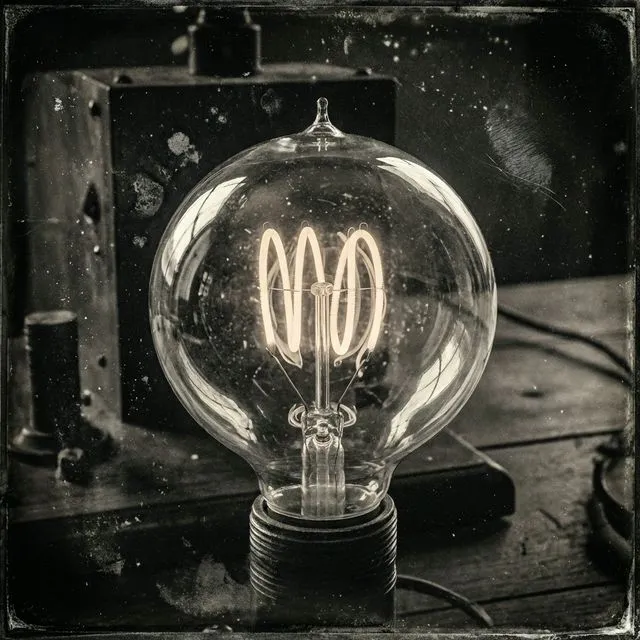
The Birth of Light: Joseph Swan’s Incandescent Bulb

The Birth of Light: Joseph Swan, Lord Armstrong, and the Electrical Revolution

The history of the nineteenth century is frequently written in steam and coal - a narrative dominated by the blackened skies of industrial Britain. Yet, in the burgeoning industrial hubs of Northern England, specifically along the banks of the Tyne and the Wear, a silent revolution was being engineered that would eventually banish the very darkness that defined the Victorian age. Contrary to the popular belief that links electric light exclusively to the name Thomas Edison, the true cradle of the incandescent bulb was not Menlo Park, New Jersey, but the rigorous industrial landscape of Tyneside.

INV-1878-SW Read Record →
Posts
Arts and Culture

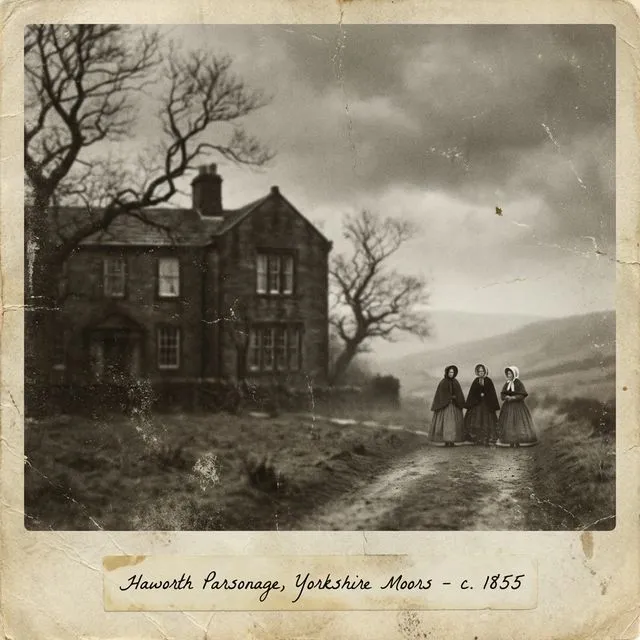
The Brontës: Voices from the Moors

In the windswept isolation of Haworth Parsonage, set against the grim and majestic backdrop of the Yorkshire Moors, three sisters - Charlotte, Emily, and Anne Brontë - wrote stories that would shake the Victorian world.

The Glass Town

Children of an Irish clergyman, they grew up in a place where life was short and harsh. Their mother died young, as did their two elder sisters. To escape the reality of the graveyard next door, they created elaborate fantasy worlds: Angria and Gondal. These tiny, hand-stitched books were the training ground for their genius.

LIT-1847-BS Read Record →
Posts
Industrial Heritage

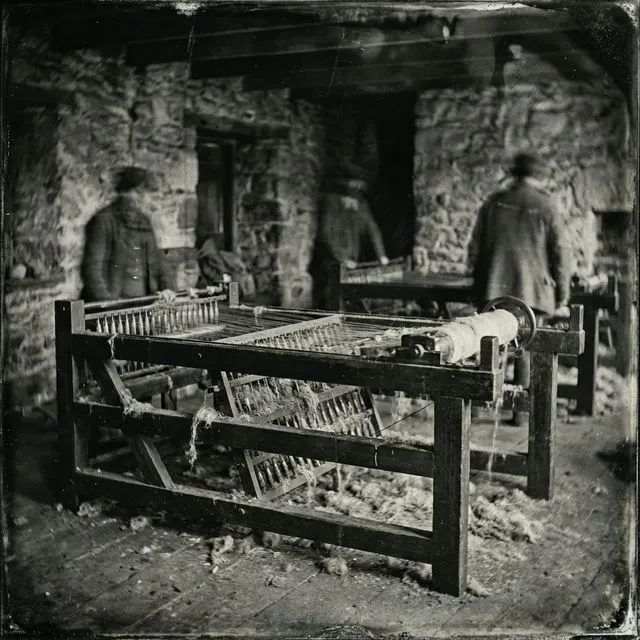
The Spinning Jenny: The Engine of Revolution

Legend has it that in 1764, a weaver named James Hargreaves in Stanhill, Lancashire, watched his daughter Jenny knock over a spinning wheel. Seeing the spindle continue to revolve upright, an idea struck him: could a single wheel turn multiple spindles?

The result was the Spinning Jenny, a machine that allowed one worker to spin eight threads at once. Later versions would manage eighty.

The Disruption

Before the Jenny, spinning was a cottage industry, done by women at home using a single-thread wheel. It was slow and could not keep up with the demand from weavers. Hargreaves’ invention broke this bottleneck, but it also threatened livelihoods.

IND-1764-SJ Read Record →
Posts
Ancient and Medieval

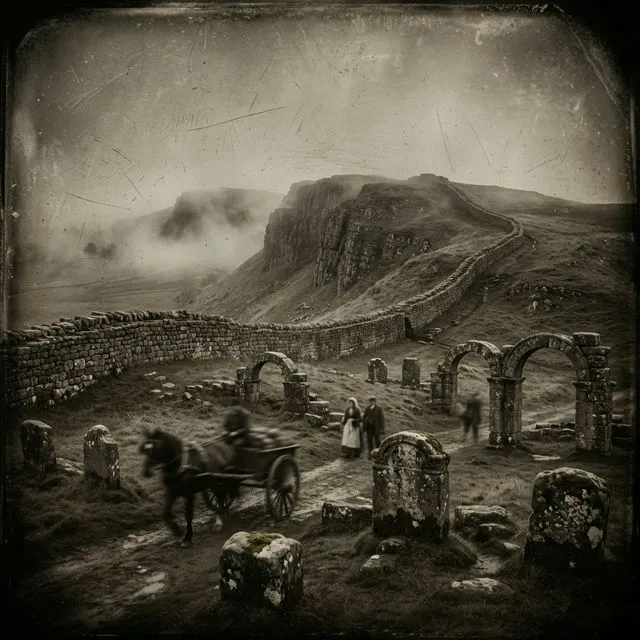
Hadrian's Wall: The Edge of Empire

In 122 AD, the Emperor Hadrian visited Britain. Looking north at the rugged, untamed lands of the Caledonians, he decided that the expansion of Rome must end. He ordered a wall to be built, “to separate the Romans from the barbarians.”

It was a feat of engineering without parallel in the western world. Stretching 73 miles (80 Roman miles) from Wallsend on the River Tyne to Bowness-on-Solway in the west, it slashed across the neck of England.

ARC-0122-HW Read Record →