100 ARCHIVES

Posts


Posts
Arts and Culture

Alfred Wainwright: The Man Who Mapped the Fells

Alfred Wainwright: The Man Who Mapped the Fells

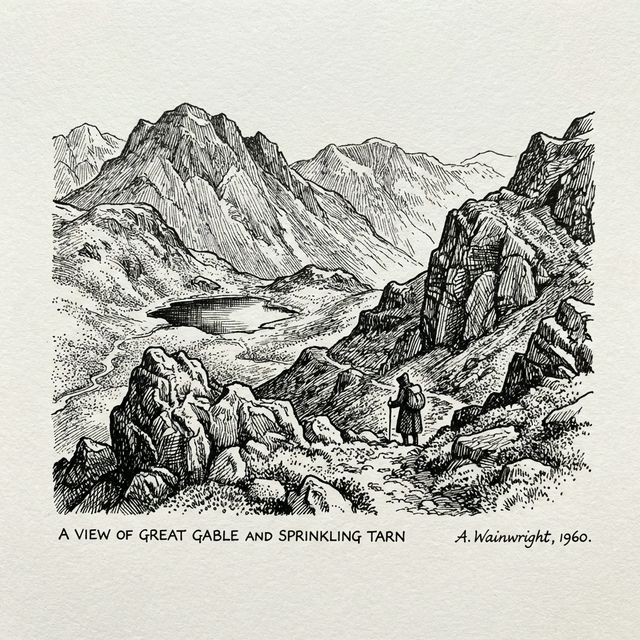
In the annals of British topographical literature and cartography, few figures occupy a position as singular, or as paradoxically revered, as Alfred Wainwright. To categorize him merely as a guidebook author is to fundamentally underestimate the scope of his contribution to the cultural and physical engagement with the English landscape. Wainwright was an artist, a philosopher of solitude, a reluctant celebrity, and an obsessive chronicler who transformed the rugged, chaotic reality of the Lake District fells into a coherent, artistic, and deeply personal masterpiece.

CUM-1955-AW Read Record →
Posts
Industrial Heritage

Brunner & Mond: The Foundations of Imperial Chemical Industries

Introduction: The Chemical Architectonics of Northern England

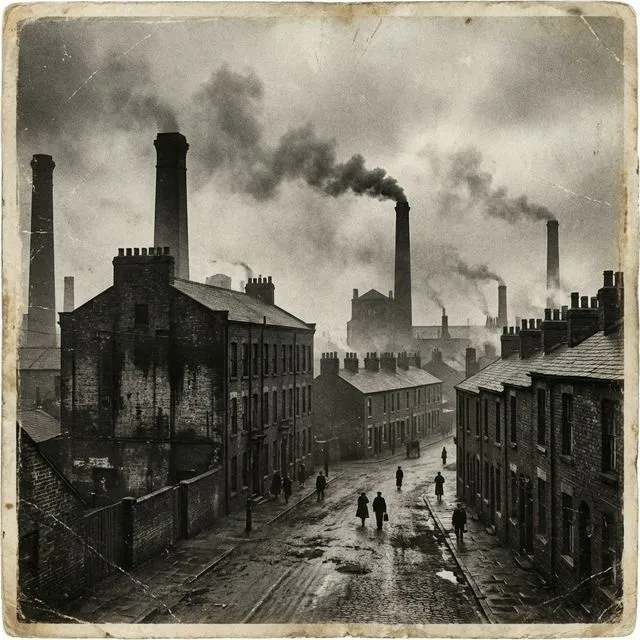
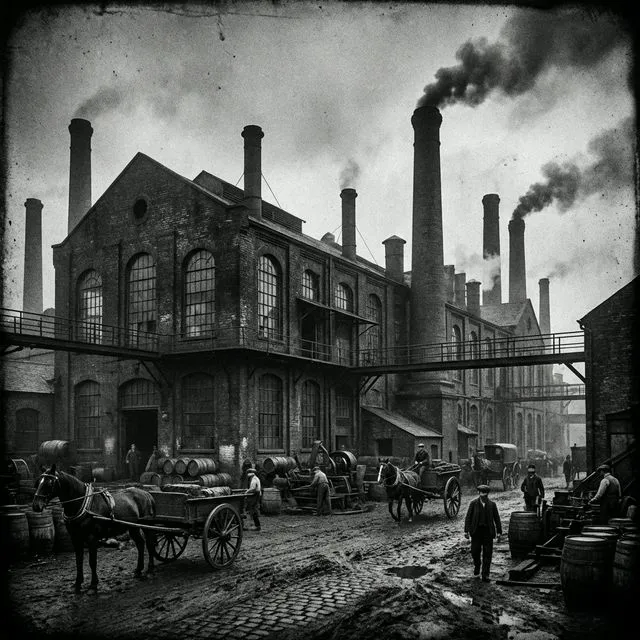
The trajectory of the British chemical industry in the late nineteenth century represents more than a mere shift in production methodologies; it constitutes a fundamental reorganization of industrial capitalism, spatial geography, and labor relations. At the heart of this transformation lies the partnership established in 1873 between John Tomlinson Brunner and Ludwig Mond. Situated in the verdant yet industrially potent Weaver Valley of Cheshire, Brunner, Mond & Co. did not simply introduce a new chemical process to the British Isles; they constructed a corporate edifice that would eventually serve as the foundation for Imperial Chemical Industries (ICI).

IND-1873-BM Read Record →
Posts
Industrial Heritage

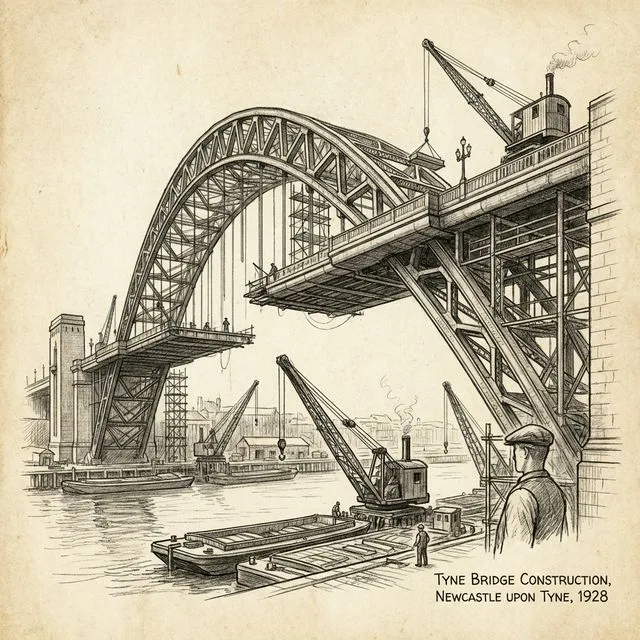
Building the Tyne Bridge: A Symbol of Northern Resilience

Introduction: The Industrial Geography of the River Tyne

For two millennia, the River Tyne has served a dual purpose in the geography of North East England. Carving its path through the rugged topography of the region, it has acted as a formidable physical boundary separating the settlements of Newcastle and Gateshead. Simultaneously, it functioned as the primary commercial artery for the British Empire, a waterway that pumped the lifeblood of the nation - coal and ships - out to the rest of the globe. However, by the dawn of the twentieth century, the gorge of the Tyne presented a severe logistical paradox that threatened to strangle the region’s development.

IND-1928-TB-NE Read Record →
Posts
Architecture and Landscape

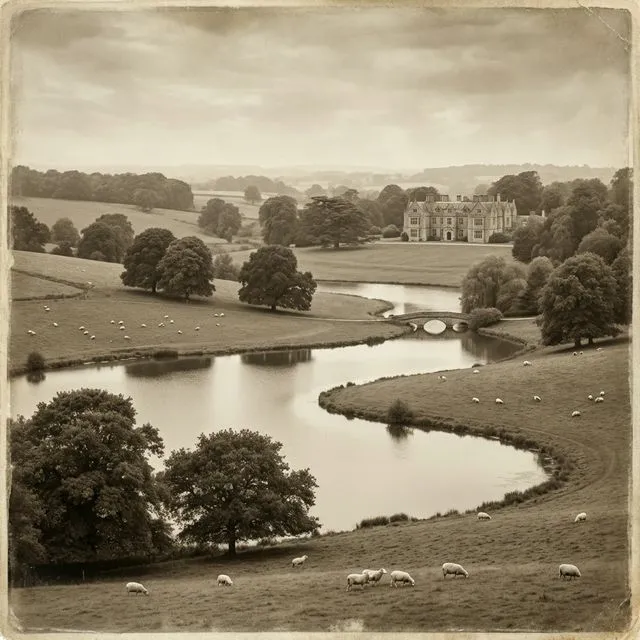
Capability Brown: The Man Who Shaped the English Landscape

Capability Brown: The Man Who Shaped the English Landscape

Introduction: The Architect of the English Imagination

When we gaze upon the British countryside, we are often deceived by its apparent naturalness. We see rolling hills, serpentine lakes that disappear into the distance, and carefully placed clumps of trees that seem to have stood there since time immemorial. However, the English landscape, as it exists in the collective imagination, is not a product of nature alone. It is, to a remarkable degree, a constructed artifact - a deliberate manipulation of earth, water, and vegetation designed to evoke specific emotional responses.

IND-1873-BM Read Record →
Posts
Maritime and Trade

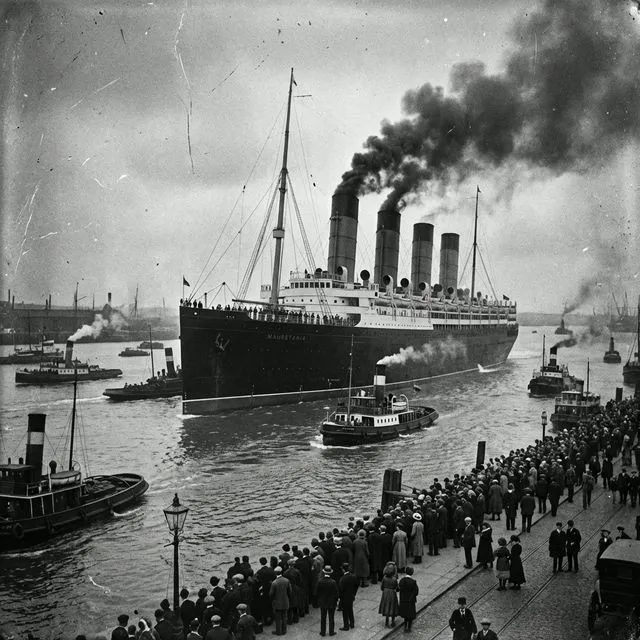
Cunard Line: The Gateway to the New World

Cunard Line: The Gateway to the New World

When we look back at the nineteenth century, our minds often turn to the heavy industries that defined the era: the extraction of coal and the forging of iron. These were the raw materials that powered the engines shrinking the globe. However, there is another material, far more fragile yet equally enduring, that captures the human essence of this industrial transformation: ink.

IND-1873-BM Read Record →
Posts
Maritime and Trade

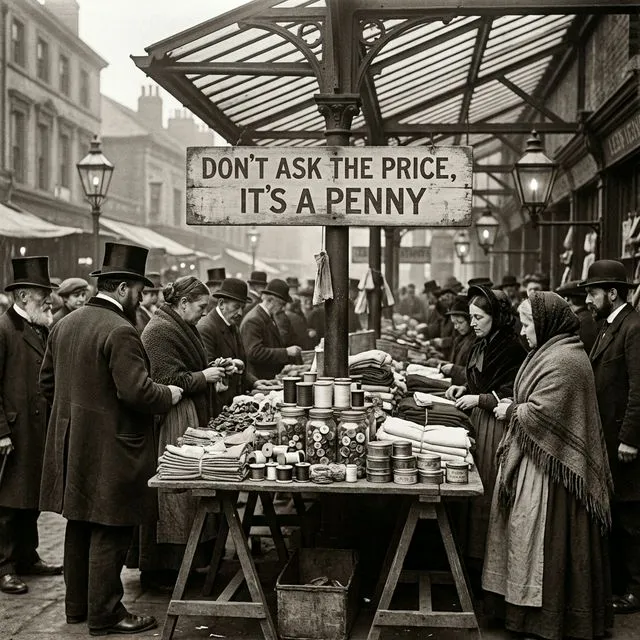
From Open Market to High Street: The Genesis of Marks & Spencer

From Open Market to High Street: The Genesis of Marks & Spencer

The history of British retail is often told through the lens of grand London department stores, but the true revolution in consumer culture began much further north, amidst the industrial clamor of Leeds. The story of Marks & Spencer is not merely a corporate biography; it is a narrative of architectural evolution, sociological shifts, and an unlikely partnership that bridged the gap between Eastern European migration and Yorkshire pragmatism. To understand the global giant we know today, we must look past the modern food halls and return to the wooden trestle tables of the late Victorian era.

LDS-1884-MS Read Record →
Posts
Arts and Culture

L.S. Lowry: Capturing the Industrial Soul

The Enigma of the Matchstick Man

In the grand narrative of twentieth-century British art, Laurence Stephen Lowry (1887–1976) stands as a singular, often paradoxical figure. To the wider public, he is an affectionate icon, the man who immortalized the soot-choked skyline of the industrial North and populated it with his famous “matchstick men.” These figures became the visual shorthand for the working-class experience in mid-century England - a dialect of paint that spoke of clogs, shawls, and the factory whistle. Yet, within the corridors of the art establishment, Lowry has historically been viewed with a degree of skepticism, frequently categorized as a “Sunday painter,” a primitive talent, or a parochial eccentric whose artistic vision was limited to the mill gates of Lancashire.

IND-1914-LSL Read Record →
Posts
Science and Innovation

Nuclear Dawn: A Forensic Analysis of the 'Ten Years of Power' Retrospective (1966)

Nuclear Dawn: The Spirit of 1966 and the Atomic Chronicle

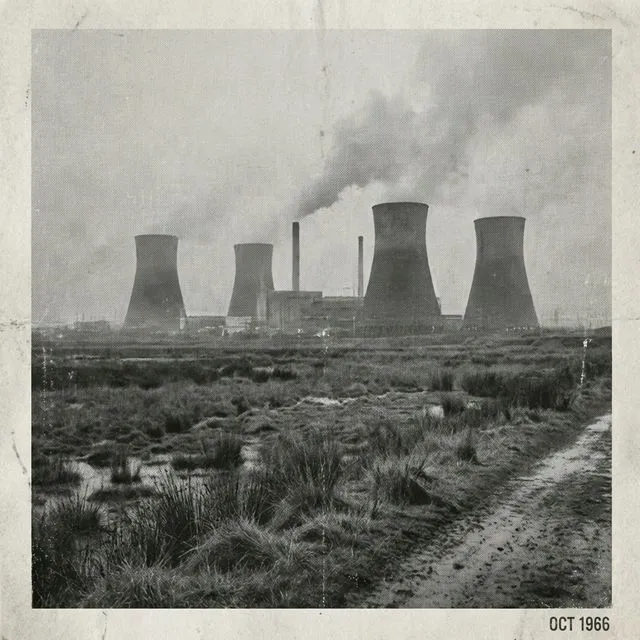
In November 1966, the United Kingdom Atomic Energy Authority (UKAEA) released a publication that appeared, on the surface, to be a standard technical retrospective. Titled Ten Years of Nuclear Power: A Salute to Calder Hall, this booklet was issued to mark the decennial of the world’s first commercial nuclear power station, situated on the remote and windswept coast of West Cumbria. However, to view this document merely as a catalogue of engineering statistics or a report on electricity generation is to miss its profound historical significance. Functionally, it served as a manifesto of British modernity, a crystallized artifact of a specific cultural and political moment that historians now recognize as the high-water mark of the “White Heat” era.

IND-1873-BM Read Record →
Posts
Architecture and Landscape

The Bank of England’s Northern Branch: Architecture of Power

Introduction: The Stone and the Sovereign

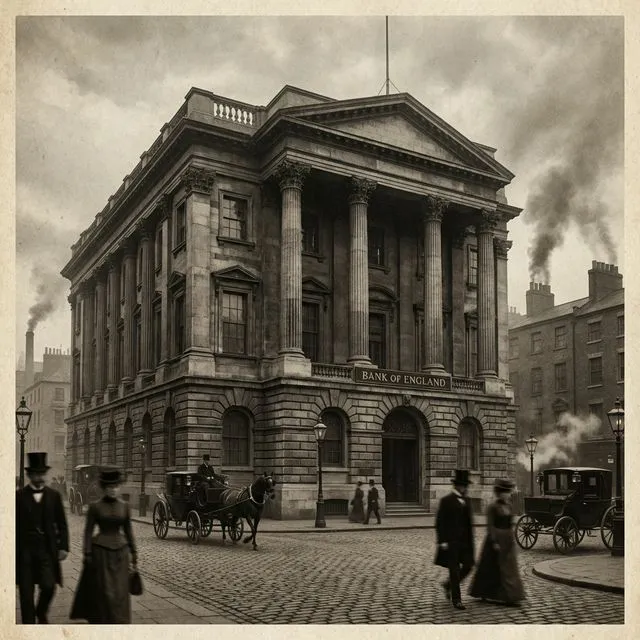
In the early decades of the 19th century, Newcastle upon Tyne presented a striking paradox to the observer. It was a city of profound duality, defined by a violent collision between the gritty reality of production and the high ideals of civilization. On one side lay the roaring engine of the British Industrial Revolution: a landscape scarred by the relentless extraction of coal, the forging of iron, and a rapidly expanding proletariat workforce living beneath the shadow of smoke-belching chimneys. On the other side, however, a different city was rising - one of the most ambitious and refined urban planning projects in European history. This was the birth of Grainger Town.

ARC-1838-GrySt Read Record →