The Spinning Jenny: The Engine of Revolution
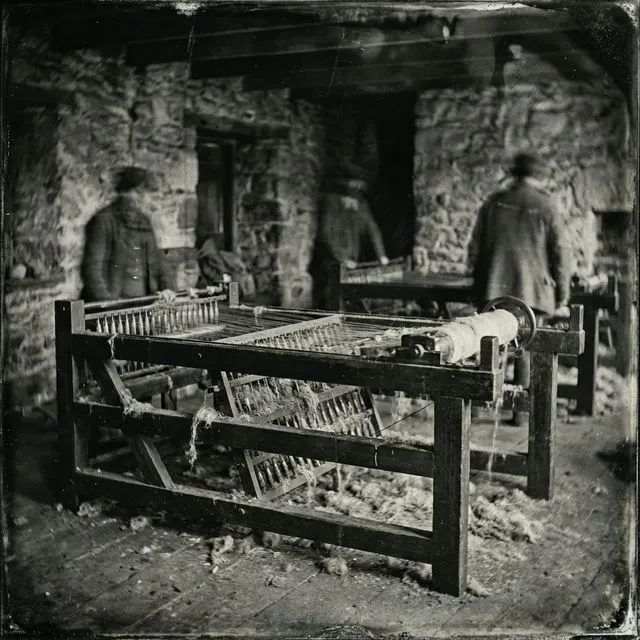
Legend has it that in 1764, a weaver named James Hargreaves in Stanhill, Lancashire, watched his daughter Jenny knock over a spinning wheel. Seeing the spindle continue to revolve upright, an idea struck him: could a single wheel turn multiple spindles?
The result was the Spinning Jenny, a machine that allowed one worker to spin eight threads at once. Later versions would manage eighty.
The Disruption
Before the Jenny, spinning was a cottage industry, done by women at home using a single-thread wheel. It was slow and could not keep up with the demand from weavers. Hargreaves’ invention broke this bottleneck, but it also threatened livelihoods.
“The machine does not eat, nor sleep, but it devours the work of ten men.”
Fearing for their jobs, local spinners broke into Hargreaves’ house and destroyed his machines. He was forced to flee to Nottingham.
The Factory System
Despite the resistance, the march of progress was unstoppable. The Jenny, combined with Arkwright’s Water Frame, moved textile production out of cottages and into high-volume factories. Lancashire became the workshop of the world, its damp climate perfect for processing cotton.
The Spinning Jenny was more than a clever mechanism; it was the spark that ignited the Industrial Revolution, fundamentally altering the social fabric of Britain.