100 ARCHIVES

Science and Innovation


Science and Innovation
Industrial Heritage

Brunner & Mond: The Foundations of Imperial Chemical Industries

Introduction: The Chemical Architectonics of Northern England

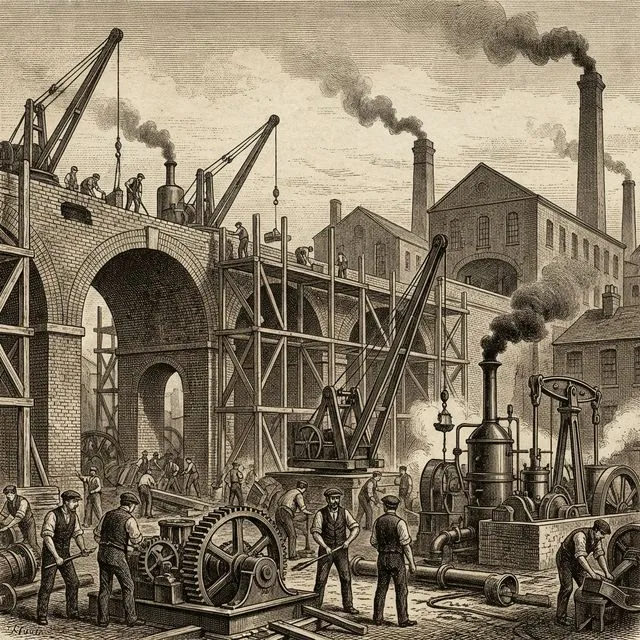
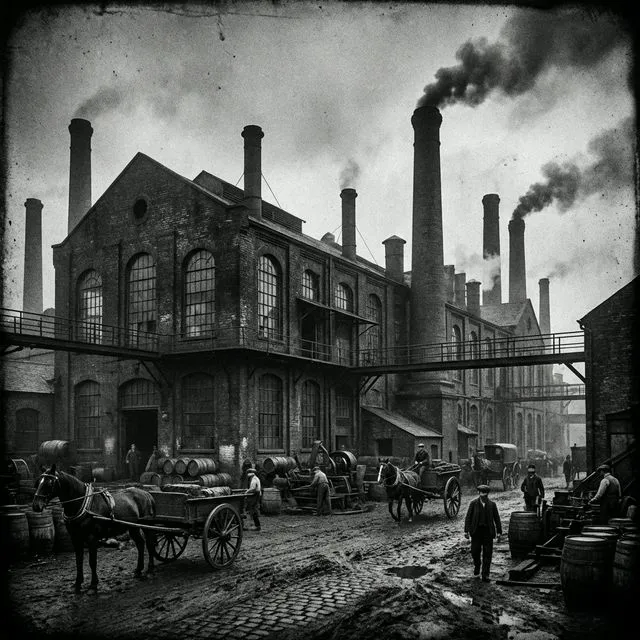
The trajectory of the British chemical industry in the late nineteenth century represents more than a mere shift in production methodologies; it constitutes a fundamental reorganization of industrial capitalism, spatial geography, and labor relations. At the heart of this transformation lies the partnership established in 1873 between John Tomlinson Brunner and Ludwig Mond. Situated in the verdant yet industrially potent Weaver Valley of Cheshire, Brunner, Mond & Co. did not simply introduce a new chemical process to the British Isles; they constructed a corporate edifice that would eventually serve as the foundation for Imperial Chemical Industries (ICI).

IND-1873-BM Read Record →
Science and Innovation

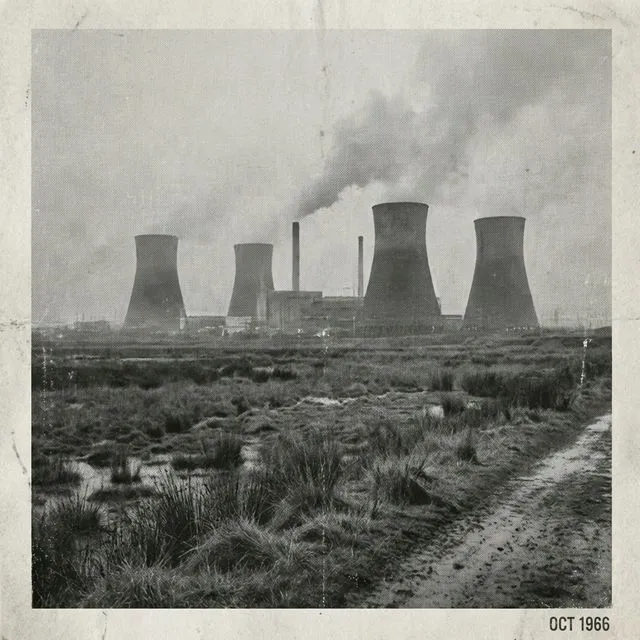
Nuclear Dawn: A Forensic Analysis of the 'Ten Years of Power' Retrospective (1966)

Nuclear Dawn: The Spirit of 1966 and the Atomic Chronicle

In November 1966, the United Kingdom Atomic Energy Authority (UKAEA) released a publication that appeared, on the surface, to be a standard technical retrospective. Titled Ten Years of Nuclear Power: A Salute to Calder Hall, this booklet was issued to mark the decennial of the world’s first commercial nuclear power station, situated on the remote and windswept coast of West Cumbria. However, to view this document merely as a catalogue of engineering statistics or a report on electricity generation is to miss its profound historical significance. Functionally, it served as a manifesto of British modernity, a crystallized artifact of a specific cultural and political moment that historians now recognize as the high-water mark of the “White Heat” era.

IND-1873-BM Read Record →
Science and Innovation
Industrial Heritage

The Hydraulic Revolution: How Engineering Defeated Cholera in the Victorian North

The Hydraulic Revolution: How Engineering Defeated Cholera in the Victorian North

Executive Summary The cholera epidemic of 1866, historically designated as the “Fourth Visitation,” constitutes a pivotal moment in the infrastructural history of Northern England. While the foundational etiology of the disease had been hypothesized by John Snow in London a decade prior, it was the industrial metropolises of the North - specifically Leeds, Newcastle upon Tyne, and Liverpool - that transformed these theoretical frameworks into tangible governance and massive engineering projects. This report provides an exhaustive analysis of the 1866 outbreak within the northern industrial corridor, arguing that the true victory lay not in the drawing of maps, but in the Hydraulic Revolution that followed.

IND-1866-ENG Read Record →
Science and Innovation
Industrial Heritage

The Rocket: A Locomotive Legend

Introduction: The Synthesis of a Revolution

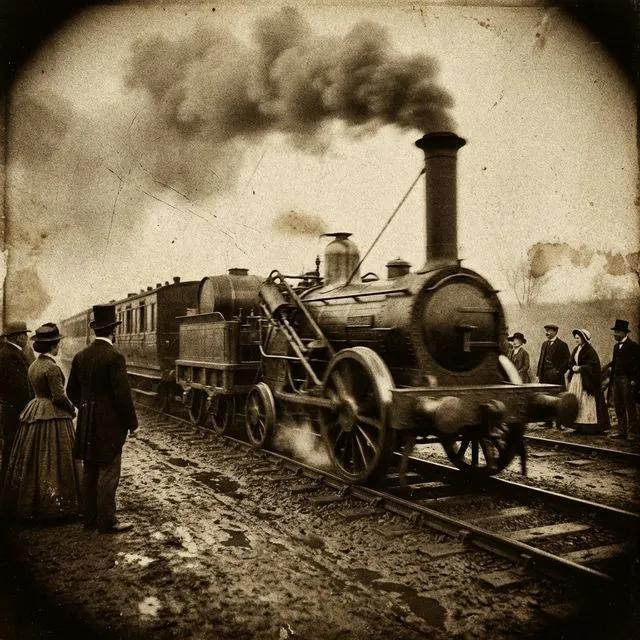
The year 1829 stands as a demarcation line in the history of human technology. Before this date, the concept of rapid, long-distance travel was biologically limited to the endurance of a horse. After this date, humanity entered the age of the machine. At the center of this transformation was a yellow and black machine known as the Rocket.

However, to view the Rocket merely as a singular invention is to misunderstand its nature. As historical analysis reveals, the creation of this locomotive was an act of brilliant integration. George Stephenson and his son Robert did not conjure the machine from the void; rather, they synthesized years of disparate, often clumsy experimentation into a single, cohesive archetype. By the late 1820s, the engineering world was at a stalemate. Distinguished figures such as James Walker and John Rastrick viewed the steam locomotive as a fundamentally flawed technology - clumsy, slow, and fit only for hauling coal at a snail’s pace on colliery tramways. They argued that it lacked the sustained power required for inter-city transport.

IND-1829-LMR Read Record →
Science and Innovation

The Birth of Light: Joseph Swan’s Incandescent Bulb

The Birth of Light: Joseph Swan, Lord Armstrong, and the Electrical Revolution

The history of the nineteenth century is frequently written in steam and coal - a narrative dominated by the blackened skies of industrial Britain. Yet, in the burgeoning industrial hubs of Northern England, specifically along the banks of the Tyne and the Wear, a silent revolution was being engineered that would eventually banish the very darkness that defined the Victorian age. Contrary to the popular belief that links electric light exclusively to the name Thomas Edison, the true cradle of the incandescent bulb was not Menlo Park, New Jersey, but the rigorous industrial landscape of Tyneside.

INV-1878-SW Read Record →
Science and Innovation
Industrial Heritage

The Spinning Jenny: The Engine of Revolution

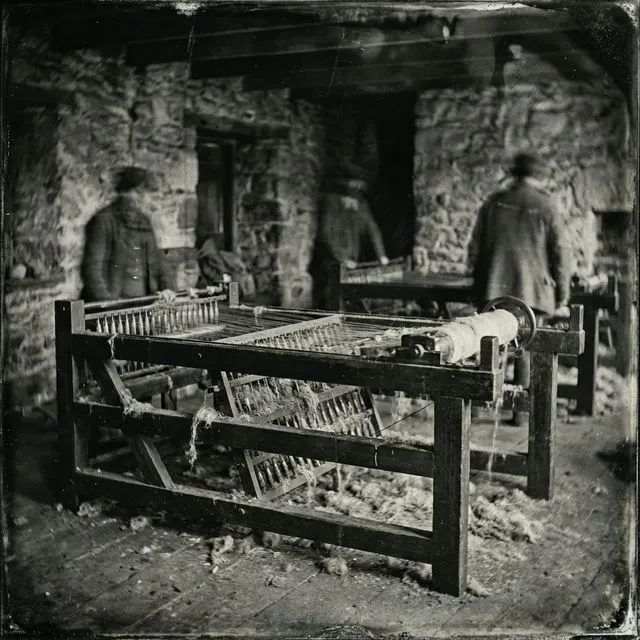
Legend has it that in 1764, a weaver named James Hargreaves in Stanhill, Lancashire, watched his daughter Jenny knock over a spinning wheel. Seeing the spindle continue to revolve upright, an idea struck him: could a single wheel turn multiple spindles?

The result was the Spinning Jenny, a machine that allowed one worker to spin eight threads at once. Later versions would manage eighty.

The Disruption

Before the Jenny, spinning was a cottage industry, done by women at home using a single-thread wheel. It was slow and could not keep up with the demand from weavers. Hargreaves’ invention broke this bottleneck, but it also threatened livelihoods.

IND-1764-SJ Read Record →