Nuclear Dawn: A Forensic Analysis of the 'Ten Years of Power' Retrospective (1966)
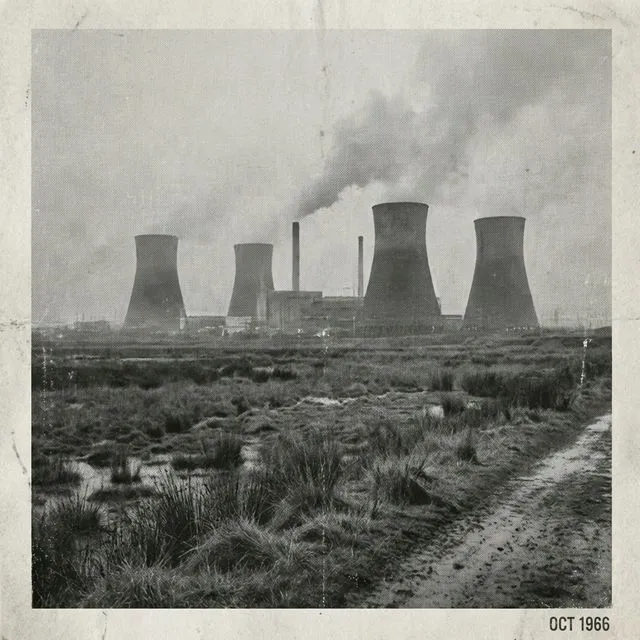
Nuclear Dawn: The Spirit of 1966 and the Atomic Chronicle
In November 1966, the United Kingdom Atomic Energy Authority (UKAEA) released a publication that appeared, on the surface, to be a standard technical retrospective. Titled Ten Years of Nuclear Power: A Salute to Calder Hall, this booklet was issued to mark the decennial of the world’s first commercial nuclear power station, situated on the remote and windswept coast of West Cumbria. However, to view this document merely as a catalogue of engineering statistics or a report on electricity generation is to miss its profound historical significance. Functionally, it served as a manifesto of British modernity, a crystallized artifact of a specific cultural and political moment that historians now recognize as the high-water mark of the “White Heat” era.
The year 1966 represented a crucial pivot point in the British post-war experience. It occupied a fragile space in time, suspended between the grim austerity of the immediate post-war years and the industrial unrest and economic stagnation that would come to characterize the 1970s. It was a moment of supreme confidence, where the “New Elizabethan” age - proclaimed at the Queen’s coronation and reinforced by her opening of Calder Hall in 1956 - seemed to be delivering on its boldest promises. The UKAEA’s commemorative booklet was, therefore, much more than a corporate report; it was the validation of a massive geopolitical gamble. It asserted that Britain, despite the rapid dissolution of its colonial empire, remained a first-rate global power through its intellectual and technical mastery of the atom.
This article conducts a forensic analysis of the themes, context, and implications of that 1966 retrospective. We will examine the rhetorical strategies used to frame nuclear power as a distinct break from the “dark satanic mills” of the industrial past, positioning Calder Hall as a “Cathedral of the Marsh” that harmonized high technology with the rugged Cumbrian landscape. Furthermore, we will investigate the socio-economic transformation of West Cumbria, a region that shifted from a depressed coal backwater to the vanguard of the “Nuclear Coast,” creating a unique social stratum known locally as “The Atomics.” Crucially, we must also interrogate the deafening silences within the 1966 narrative - most notably the omission of the catastrophic 1957 Windscale Fire, an event that the triumphant tone of 1966 could not acknowledge without undermining the entire project of modernization.
The Rhetoric of the “White Heat”
To fully comprehend the tone of the 1966 publication, one must first understand the political vocabulary that dominated the mid-1960s. The defining ethos of the era was captured in Harold Wilson’s speech at the 1963 Labour Party Conference. There, he famously warned that a “new Britain” would need to be forged in the “white heat” of a scientific revolution. While Wilson’s exact phrasing was nuanced, the metaphor of “white heat” became the governing ideology of the decade. It signaled a fierce rejection of the amateurism and aristocracy that had allegedly held Britain back, proposing instead a meritocratic society led by technologists, scientists, and engineers.
The UKAEA’s 1966 booklet serves as a textual embodiment of this ideology. The language employed in such retrospectives was characteristically hubristic. It framed nuclear power not as a dangerous Promethean fire - a force of destruction - but as a domesticated utility, a loyal “servant” of the British people. The document utilized a vocabulary of inevitability, describing the transition from coal to nuclear energy not as a choice, but as a natural evolutionary step in human progress. Phrases such as “Nuclear Dawn” and “Power for the Future” were commonplace in the Authority’s public relations output, reinforcing the idea that the atomic age was a distinct epochal shift, separating the future from the past.
This optimism was not merely promotional puffery; it was structural. The Ministry of Technology (MinTech), established by the Wilson government, viewed the nuclear industry as the jewel in the crown of state-sponsored innovation. Calder Hall was the proof of concept for this entire worldview. By 1966, the station had operated for a decade with high reliability, generating billions of units of electricity. The booklet’s tone, therefore, was one of vindication. It suggested that the gamble taken in the desperate, fuel-starved years of the late 1940s had paid off. It proudly proclaimed that the “white laboratory coat” had successfully replaced the “cloth cap” as the primary symbol of British labor.
The Narrative of Continuity and Change
The narrative arc of the 1966 booklet likely followed a specific teleology: moving from the scarcity and darkness of the post-war coal crisis to the abundance and light of the nuclear present. It positioned Calder Hall not as an isolated experiment, but as the “father” of a lineage. By 1966, the first generation of Magnox stations was largely complete, and the second generation (AGR) was underway. The booklet served to link these developments, presenting a seamless continuity of progress.
However, this narrative required careful curation. The dual purpose of Calder Hall - to produce weapons-grade plutonium for the military and electricity for the grid - was an “open secret” that the text had to navigate delicately. In the optimistic glare of 1966, the military origins of the project were likely subordinated to the “Atoms for Peace” narrative. The production of plutonium would be mentioned, if at all, in euphemistic terms regarding “strategic necessity,” while the focus remained resolutely on the electricity flowing into the National Grid.
Visual Language: The Atomic Aesthetic
The physical presentation of UKAEA literature in the mid-1960s reflected the “Atomic Age” aesthetic that permeated British design. This visual style was characterized by a tension between the invisible (radiation, atomic structures) and the monumental (cooling towers, reactor blocks).
Typography and Layout
The 1966 booklet likely eschewed the serifed, traditionalist typography of the 1950s in favor of clean, Swiss-style sans-serif fonts such as Helvetica or Univers. This typographic choice was a signifier of modernity, aligning the UKAEA with the forward-looking corporate identities of multinational giants rather than the stuffy bureaucracy of the civil service. The layout would have been sparse and grid-based, utilizing white space to convey a sense of clinical precision - a visual metaphor for the sterile, dust-free environments of the reactor halls.
The Iconography of the Atom
A key visual motif of the era was the “vital form” - abstract representations of molecular structures, electron orbits, and starbursts. These motifs appeared on everything from fabric patterns to government brochures, domesticating the terrifying power of the atom into a decorative element. In the context of the UKAEA booklet, such imagery served to demystify the technology, reducing the existential threat of nuclear fission to a series of elegant, controllable geometries. The schematic of the “spiky atom” became the logo of the age, branding nuclear power as dynamic and fundamental.
Photography of the Sublime
The photographic content of the 1966 retrospective would have focused on the “industrial sublime.” The standard visual trope of the era involved high-contrast black-and-white images of the reactor cap (the “charge face”), often featuring a lone technician checking a gauge. This imagery served two purposes. First, it emphasized the massive scale of the engineering feat - Calder Hall’s reactors weighed 33,000 tonnes each. Second, it reassured the public that this leviathan was under the watchful eye of the “New Men” - the technocratic elite who understood the machine. The cooling towers of Calder Hall, with their graceful hyperboloid curves, were the cathedral spires of this new religion. The 1966 booklet would have featured them prominently, likely silhouetted against the Cumbrian sunset or the fells of the Lake District, framing them as permanent, almost natural additions to the landscape.
The Geopolitics of the “Nuclear Coast”
The selection of West Cumbria for the UK’s primary nuclear complex was a decision rooted in the unique industrial and geological history of the region. To understand the 1966 retrospective’s celebration of the site, one must understand the landscape it occupied. West Cumbria is a place of dramatic contrasts: the jagged, vertical peaks of the Lake District National Park crash abruptly into the Irish Sea, leaving a narrow coastal strip that had been industrialized for centuries.
Before the atom, this was coal and iron country. The Whitehaven coalfield extended far out under the sea, creating some of the most dangerous and arduous mining conditions in the world. By the 1930s, the region was designated a “Depressed Area.” Unemployment was endemic, and the physical environment was scarred by slag heaps and the smoke of ironworks. The 1966 booklet’s celebration of nuclear power must be read against this backdrop of industrial decay. For the local population, the arrival of the UKAEA was not just an engineering project; it was an economic resurrection.
The Logic of Isolation
The decision to site the nuclear complex at Sellafield (renamed Windscale, and later Sellafield again) was driven by the “logic of isolation.” In the late 1940s, when the site was first developed for the Windscale Piles, the government required a location that was remote from major population centers in case of a catastrophic release of radiation. The “Depressed Coast” of Cumberland fit this criterion perfectly: it was sparsely populated, geographically isolated by the mountains, yet possessed a desperate and available industrial workforce.
However, isolation alone was insufficient. The site also required resources that only this specific geography could provide. The reactors required millions of gallons of water for cooling. The deep, pure waters of Wastwater - England’s deepest lake - were tapped to feed the voracious thirst of the piles and later the heat exchangers of Calder Hall. Furthermore, the site was not virgin land; it was a repurposed Royal Ordnance Factory (ROF Sellafield) that had produced TNT during World War II. This meant that rail links, water pipes, and security fencing were already in place, allowing the atomic project to hit the ground running in the frantic race for the bomb.
By 1966, the identity of West Cumbria had fundamentally shifted. It was no longer the hinterland of the coal barons; it was the “Nuclear Coast.” The presence of Calder Hall, alongside the Windscale reprocessing plant, created a monoculture of high-tech employment that dominated the local economy. The retrospective celebrated this identity, suggesting a continuity of skill: the men who had once hewed coal from beneath the sea were now welding the stainless steel of the reactor vessels. This rhetorical maneuver was essential for maintaining local support. It flattered the region, granting it a new strategic importance that rivaled its Victorian heyday.
Social Impact: The Rise of “The Atomics”
The most tangible impact of Calder Hall on West Cumbria was the arrival of a new social class: “The Atomics.” This term, used by locals to describe the influx of scientists, engineers, and managers from the south of England, signified a profound demographic shift. To house this new elite, the UKAEA built extensive housing estates, most notably in the village of Seascale. In the 1960s, Seascale became a “brain village,” boasting one of the highest concentrations of PhDs in the country.
The 1966 booklet likely glossed over the initial friction between the “Atomics” and the “Locals,” focusing instead on the revitalization of the area. However, the social division was real. A famous anecdote from the era tells of a local milkman who kept two account books: one marked “Locals” and the other “Atomics.” This division extended to social clubs and pubs. The Atomics drank wine and held dinner parties; the Locals drank ale and met in working men’s clubs. Yet, by 1966, integration was well underway. The “Atomics” had founded arts societies, revitalized local schools, and brought a cosmopolitan flair to the grim industrial coast. The retrospective would have framed this as a cultural renaissance, arguing that the nuclear industry brought civilization to the wild north.
Economically, the impact was undeniable. In 1966, the UKAEA was the premier employer in the region. The jobs at Calder Hall were viewed as “jobs for life,” offering pensions, healthcare, and safety standards far above those of the declining coal pits. Paradoxically, the nuclear industry was seen as safer than traditional industry. The coal mines killed dozens of men annually in accidents; the nuclear plant, in its day-to-day operations, was sterile, regulated, and seemingly benign. The wages of the “Atomics” and the local operatives supported a service economy in Whitehaven and Egremont, proving the dividend of the “peaceful atom.”
The Environmental Reality: The Shadow of Windscale
Any analysis of a 1966 UKAEA publication must grapple with the “elephant in the room”: the Windscale Fire of October 1957. Occurring just a year after the triumphant opening of Calder Hall, and on the exact same site, the fire in Pile No. 1 remains the worst nuclear accident in British history (INES Level 5). The fire was a catastrophe of design and management. The air-cooled piles overheated, the graphite core caught fire, and for days, radioactive isotopes such as Iodine-131 (I131) and Polonium-210 (Po210) billowed from the chimney. The disaster was eventually contained by the heroic and desperate decision to flood the reactor with water, ruining it forever.
The 1966 “Salute to Calder Hall” almost certainly omitted or drastically minimized this event. The UKAEA’s PR strategy in the 1960s was one of strict compartmentalization. The Authority drew a sharp rhetorical line between the “military” Windscale Piles (where the fire happened) and the “civil” Calder Hall station (which was celebrating its anniversary). This distinction was technically accurate but geographically and managerially disingenuous, as the facilities shared the same site, the same workforce, and largely the same management.
The official inquiry into the fire, led by Sir William Penney, was kept secret - known as “The Penney Report.” Prime Minister Harold Macmillan suppressed the full report to protect the “special relationship” with the US and to avoid damaging the nascent nuclear export market. In 1966, this secrecy was still in full force. The retrospective booklet would have presented a sanitized history, where the fire was perhaps a “learning experience” or entirely unmentioned, ensuring the “Nuclear Dawn” narrative remained untarnished.
This silence represents what scholars have called the “utopian nuclear imaginary.” This was the belief that nuclear power was inherently safe, clean, and benevolent. The reality of the Windscale fire - where milk was banned across 200 square miles of Cumbria - was a direct contradiction to this imaginary. The publication likely engaged in “containment” of information. By focusing exclusively on the operational success of Calder Hall (which had indeed run safely), the booklet distracted from the radiological legacy accumulating in the cooling ponds and silos of the wider site.
Architecture: The “Cathedral of the Marsh”
The architecture of Calder Hall was a definitive statement of mid-century British modernism. The 1966 booklet would have showcased the station not just as a machine, but as a monument. The four cooling towers, standing 300 feet tall, were the visual signature of the station. In the 1960s, before they became symbols of environmental threat, they were viewed as graceful, almost sculptural forms. The retrospective likely featured photographs emphasizing their symmetry and their dominance over the flat coastal plain.
The reactor buildings were clad in aluminum and glass, designed to look lightweight and permeable. This “functional expressionism” was intended to counter the secrecy of the bomb project. By using glass curtain walls, the architects (led by the Ministry of Works) suggested transparency and openness - “we have nothing to hide.”
Inside, the control room of Calder Hall, as depicted in 1966, was the cockpit of the future. The aesthetic was one of analog precision: rows of grey steel cabinets, Bakelite dials, and paper chart recorders. In 1966, this aesthetic represented the pinnacle of control. The booklet likely featured images of earnest men in white coats studying these dials, reinforcing the “White Heat” narrative of scientific management. There is a famous anecdote about the “pseudo meter”: when the Queen opened the station, she watched a large meter swing to indicate power flowing to the grid. In reality, the connection had been made earlier, and the meter was a prop designed for television cameras. This theatricality was central to the aesthetic of the era; the control room was a stage set for the performance of modernization.
Conclusion: The Legacy of the 1966 Moment
The 1966 publication Ten Years of Nuclear Power serves as a poignant time capsule. It captures a moment when the “Nuclear Dawn” was still bright, untarnished by the economic realities of the 1970s or the safety fears of the post-Chernobyl era. The booklet’s optimism was not entirely misplaced; Calder Hall did prove to be a robust and reliable workhorse, generating electricity for 47 years until its closure in 2003. It validated the Magnox design and established Britain as a pioneer in civil nuclear energy. The “White Heat” rhetoric, while hyperbolic, successfully mobilized a nation to transition from the 19th-century coal economy to a 20th-century high-tech base.
However, the retrospective is defined as much by what it omitted as by what it celebrated. The silence regarding the Windscale Fire, the glossing over of the military plutonium mission, and the failure to address long-term waste storage reveal the hubris of the era. The “Atomics” of Seascale and the locals of Whitehaven lived in the shadow of this hubris, beneficiaries of the economic boom but unwitting subjects of a vast radiological experiment. Ultimately, the 1966 “Salute to Calder Hall” stands as a monument to High Modernism. It reminds us of a time when the future was something to be constructed, poured in concrete and welded in steel, on a remote Cumbrian coast that dreamed of powering the world.
References & Further Reading
- Ten Years of Nuclear Power: A Salute to Calder Hall (UKAEA)
- The White Heat of Britain’s Decline
- Sellafield and British Nuclear Culture, 1945-1992
- The Windscale Reactor Accident: 50 Years On